Pickleball

Pickleball Injuries Near North Liberty: Four Days a Week Adds Up

Short answer

Pickleball injuries in active adults cluster at the elbow, shoulder, knee and Achilles, driven by high playing frequency, quick direction changes and overhead shots. Most are overuse problems that respond to load management and progressive strengthening. Persistent tendon cases may be evaluated for shockwave therapy.

Where pickleball shows up

Elbow

Paddle grip, drives and dinks load the same tendons as tennis elbow.

Read more

Shoulder

Overheads, serves and reaching wide — often felt at night first.

Read more

Knee

Split-steps, lunging for dinks and repeated deceleration at the kitchen line.

Read more

Achilles

Quick pushes off the line, and the tendon that complains the next morning.

Read more
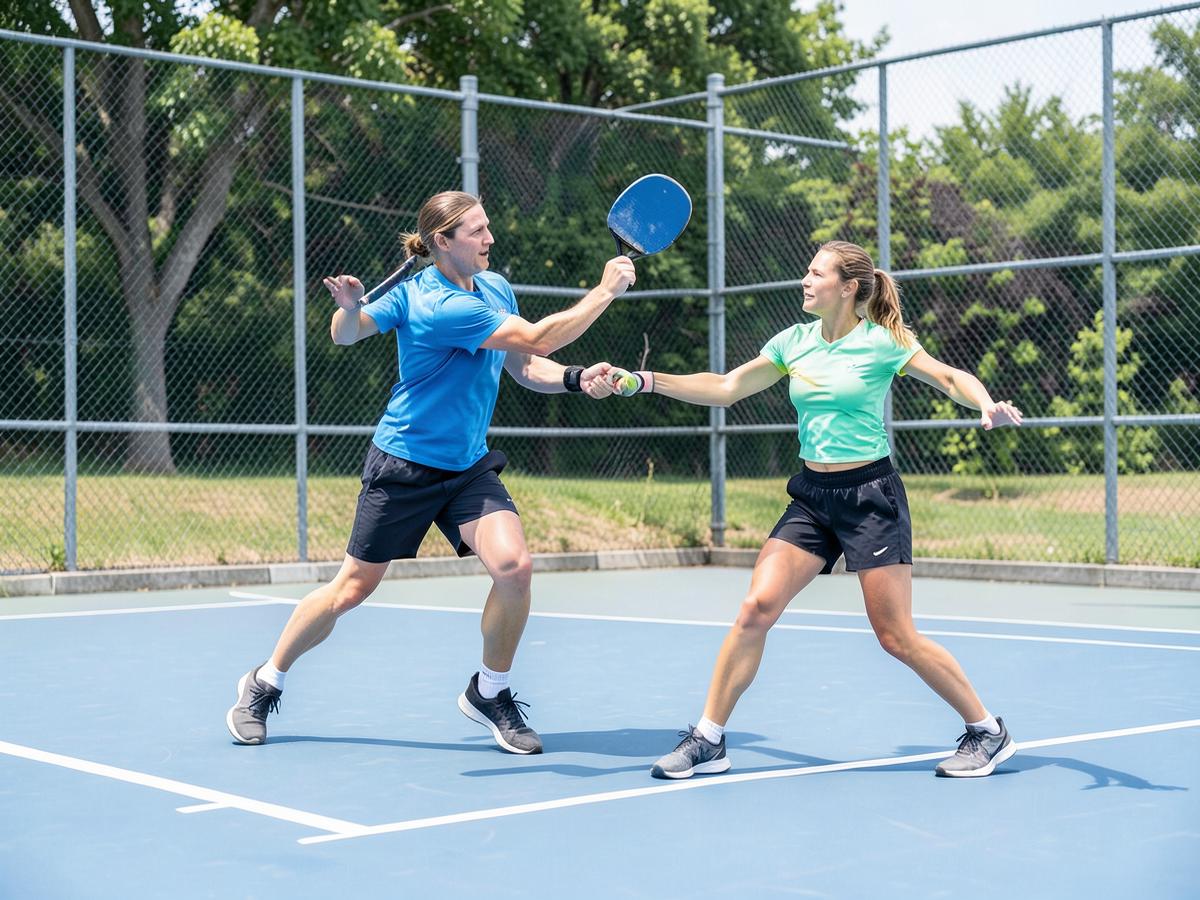
Two adults playing pickleball on an outdoor court

The pickleball pattern is frequency, not intensity

Very few people play pickleball once a week. They play three, four, five times — because it's social, it's accessible and it's fun. That's excellent for fitness and terrible for tissues that were doing far less six months ago.

Add the specific demands: repeated wrist and grip work at the paddle, overhead reaching, quick first steps, split-steps and lunges at the kitchen line, and long rallies late in a session when your calves and cuff are already fatigued.

What we look at

  • How many sessions per week, and how long each one runs
  • How long ago the volume increased
  • Court surface and footwear — court shoes versus running shoes matter here
  • Calf capacity, single-leg control and shoulder strength
  • Prior injuries to the same area, and what the last plan involved

Acute pickleball injuries — different rules

A pop at the back of the ankle with weakness pushing off, a rolled ankle you can't weight, a knee that swells within hours or gives way: get those assessed promptly. Those are evaluation and imaging conversations, not shockwave conversations.

Where shockwave may fit

For persistent tendon problems at the elbow, shoulder or Achilles that haven't responded to a real loading program, shockwave therapy may be considered as part of a plan after an evaluation at Total Health Chiropractic in Coralville.

FAQ

Pickleball questions

What about pickleball injuries — can shockwave therapy help?

Persistent pickleball-related tendon problems at the elbow, shoulder, knee or Achilles may be evaluated for shockwave therapy. Acute injuries such as a suspected Achilles rupture, ankle sprain or calf tear need assessment first and are not shockwave situations.

Why does pickleball cause so many injuries in active adults?

It combines high playing frequency with quick starts, stops, reaches and overhead shots — often in people returning to court sport after years away. The volume arrives faster than tendon and calf capacity adapts.

I felt a pop in my calf or heel mid-game. What should I do?

Stop playing and get it assessed promptly. A sudden pop with weakness pushing off can indicate an Achilles or calf injury that needs urgent evaluation rather than a treatment device.

Medical disclaimer

This page is general educational information and is not medical advice, diagnosis or treatment. It does not establish a doctor-patient relationship. Whether SoftWave® or any shockwave therapy is appropriate for you can only be determined through an in-person clinical evaluation.

Reviewed by clinical staff at Total Health Chiropractic · Last reviewed 2026-09-08 · Editorial policy

Keep reading

Don't start with the machine. Start with the diagnosis.

An evaluation determines what is actually causing the problem and whether SoftWave is an appropriate option for you.

Or call Total Health Chiropractic at (319) 338-7025

CallQuizSchedule